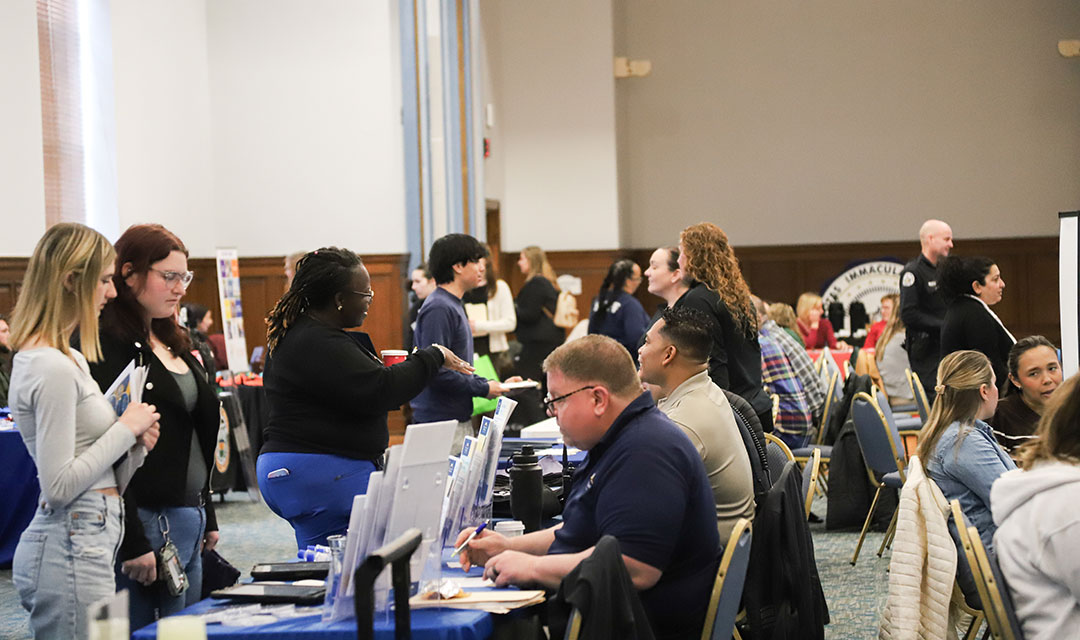
At Immaculata University, preparing students for life after graduation is not a single program or initiative, but a coordinated, campus-wide commitment that shapes nearly every aspect of the student experience. Through accelerated degree pathways, innovative academic programming and hands-on experiential learning, the University is helping students turn their education into meaningful, real-world careers while still on campus.
Immaculata is expanding its portfolio of accelerated degree options, including 4+1, 4+2 and 3+2 pathways designed to streamline advanced education and shorten the time to career entry.
Across disciplines, students are discovering more ways than ever to save time, reduce costs and build professional experience without sacrificing academic rigor. From accelerated graduate pathways to immersive internships and employer-informed curriculum design, Immaculata continues to refine its approach to higher education with one clear focus: student success.
Expanding Career Pathways Through Accelerated Programs
Immaculata is expanding its portfolio of accelerated degree options, including 4+1, 4+2 and 3+2 pathways designed to streamline advanced education and shorten the time to career entry.
In business, the 4+1 MBA pathways allow students in majors such as business management, marketing, human resource management, accounting, fashion and business and sport management to earn both a bachelor’s degree and an MBA in just five years. Students who maintain a minimum 3.0 GPA and meet progression requirements by the end of their junior year begin graduate coursework during their senior year. Courses such as Foundations of Leadership, Ethical and Legal Perspectives in Business and Contemporary Marketing help prepare them for advanced roles in today’s business landscape.
In psychology, the 4+2 B.A. to M.A. in Clinical Mental Health Counseling program provides a direct pathway into the counseling profession. Eligible students—admitted based on academic performance and a personal statement—begin graduate-level coursework during their senior year, completing 12 credits toward the master’s degree. These courses introduce foundational areas of counseling practice, including ethics, human development and research-based approaches to care.
In the health sciences, Immaculata offers additional accelerated pathways, including a 3+2 Bachelor of Science to Master of Athletic Training program. Students complete foundational undergraduate coursework in their first three years before transitioning into the graduate athletic training curriculum in year four, allowing them to earn both degrees in five years instead of six.
Similarly, the 3+2 Accelerated B.S. to M.S. in Clinical Nutrition program creates a direct route into graduate study and preparation for future registered dietitian nutritionists. Students complete three years of year-round undergraduate coursework and must meet academic benchmarks, including GPA and science-course requirements, along with an admissions essay and interview. Qualified students may also pursue early preferred admission into the Dietetic Internship track during their third year.
For students interested in law, Immaculata offers multiple pathways, including a pre-law minor and a partnership with Widener University Delaware Law School. Through the 3+3 program, qualified students can complete both a bachelor’s degree and Juris Doctor in six years instead of seven, with guaranteed admission and merit scholarship consideration for those who meet GPA and LSAT requirements.
Students may also pursue Immaculata’s Degree-in-Three options, which allow select majors to complete a bachelor’s degree in just three years through year-round coursework. This pathway reduces time to degree completion, lowers overall tuition and housing costs and enables students to enter the workforce or graduate study earlier—while still earning the same accredited education as traditional four-year programs.
Academic Innovation Connected to Industry
Immaculata’s innovation extends beyond program design into active collaboration with employers and industry leaders who help shape what students learn and how they are prepared for the workforce.
In early January, the University hosted the Preparing Graduates for Today’s Workforce Employer Panel, themed “Closing the Gap: What Employers Expect from Our Graduates.” The panel brought together professionals across education, healthcare, research, athletics, technology and business to discuss the skills most in demand today.
Panelists included Vince Citarelli, Ed.D. (IU alum), assistant superintendent for human resources and staff effectiveness at Garnet Valley School District; Joanna Dixon, DNP, RN, NPD-BC, NEA-BC, lead clinical nurse educator at Main Line Health; Jessica Gaburo, MS, LAT, ATC (IU alum), athletic trainer and clinical lead at Nemours Children’s Health; Krystal Gamez, PsyD (IU alum), clinical rater at Suburban Research Associates; Andrew Hoffman (IU alum), service supervisor at SEI; and James Tucker Kitchengs, MBA, field application scientist at Syft Technologies.
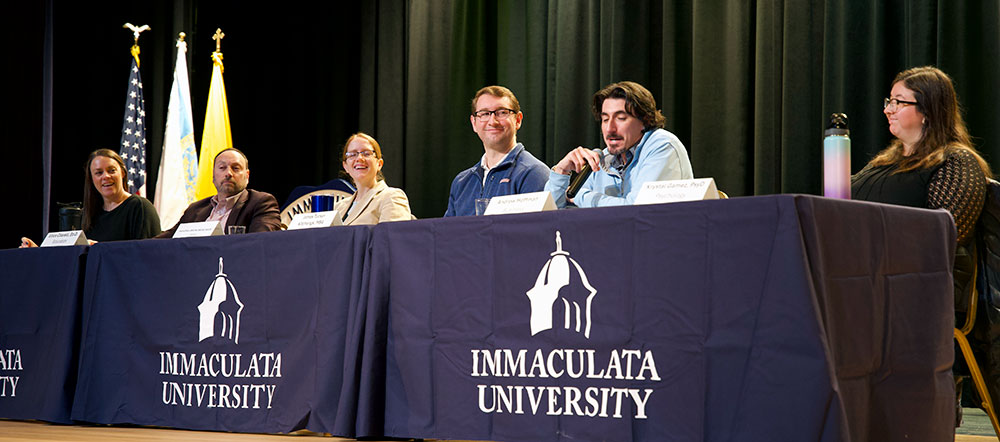
The discussion centered on essential workforce competencies, including critical thinking, communication, teamwork and AI literacy. Faculty from both undergraduate and graduate programs later participated in breakout sessions to brainstorm the best ways to incorporate employer feedback directly into curriculum development and strengthen alignment with industry expectations.
Building on this commitment to collaboration, Immaculata University recently launched its inaugural higher education conference, “Innovation Unbound: Shaping the Future of Higher Education,” a new annual series sponsored by its doctorate and master’s programs in higher education. The event brought together regional higher education leaders for a day of collaboration, research sharing and professional development focused on the evolving needs of colleges and universities.
Co-developed by Sister Ann Heath, IHM, director of Immaculata’s higher education programs, and Angela Tekely, Ed.D., professor of education at Immaculata, the conference featured sessions led by Immaculata faculty, including research on inclusive curricula and presentations on the First@IU program, which supports first-generation students through mentorship, resources and expanded career preparation.
With participation from institutions including West Chester University, George Mason University, Notre Dame of Maryland University, Widener University and Montgomery County Community College, the conference underscored Immaculata’s role as a convener of ideas and innovation in higher education. A second conference is already scheduled for Nov. 5, 2026, reinforcing the University’s ongoing commitment to collaboration and continuous improvement in the field.
Student Success and Enrollment Momentum
Immaculata’s commitment to engagement and support continues to drive strong results in both enrollment and retention. The University is seeing sustained growth across first-year and transfer populations, with freshman applications increasing from fall 2024 to fall 2025 by 15%. Freshman deposits are also up by 5.8% from the previous year. Transfer interest continues to grow as well, with applications increasing by 15% and deposits ahead by 41% from fall 2024.
That momentum is reflected across the institution. Total enrollment reached 2,326 students for Spring 2026, up from 2,237 in Spring 2025. The University also achieved a 90.8% fall-to-spring retention rate for fall 2025 to spring 2026 among first-time, full-time traditional freshmen. Graduate retention remains especially strong, with 95% of students enrolled in graduate degree programs, who did not graduate, returning to continue their studies in the spring 2026 term.
Learning by Doing
At Immaculata, learning extends well beyond the classroom through internships, clinical experiences, fieldwork and research opportunities that prepare students for professional success.
Criminology students are gaining competitive federal internship experience with agencies such as Homeland Security Investigations, U.S. Immigration and Customs Enforcement and the Federal Bureau of Investigation. Through early recruitment engagement and ongoing mentorship from faculty, students begin building professional networks in their first year. Interns contribute to investigations involving cyber fraud, financial crime, trafficking and other federal cases while gaining firsthand exposure to investigative processes and case analysis.
Communication students also benefit from robust internship opportunities across media, sports, nonprofit and corporate organizations. Students are supported through resume development, interview preparation and placement guidance. Students have interned with organizations including The Andie Summers Show, radio stations, sports franchises and nonprofit agencies, with alumni going on to careers in broadcasting, professional sports communications and nonprofit leadership.
Across all programs, the Office of Career and Professional Development plays a central role in preparing students for the workforce. Director Heidi Harrison notes that most majors require at least one internship, supported by resume workshops, mock interviews, networking events and employer partnerships.
Nursing students complete clinical rotations, education students engage in student teaching and observation and health sciences students complete field-based learning experiences.
Students also engage in nationally recognized research opportunities. In summer 2025, biology and chemistry students Mary Steinbicker and Grace Wright worked with Associate Professor Stephen C. Mason Jr., Ph.D., at the University of Florida’s McGuire Center for Lepidoptera and Biodiversity, contributing to the digitization of butterfly specimens alongside research professionals.
In addition, a data paper published in collaboration with the National Audubon Society includes three former Department of Natural Sciences students—Aidan Doyle, Liam Semmler and Alice Dougherty—and two current students, Mary Steinbicker and Mary Rady, as coauthors. The team digitized a historical natural history collection from Hog Island Audubon Camp in Maine, producing 764 occurrence records representing 417 species of animals, plants, fungi and protists, with specimens dating back to the late 1800s and hundreds more from the 1960s during the height of DDT use.
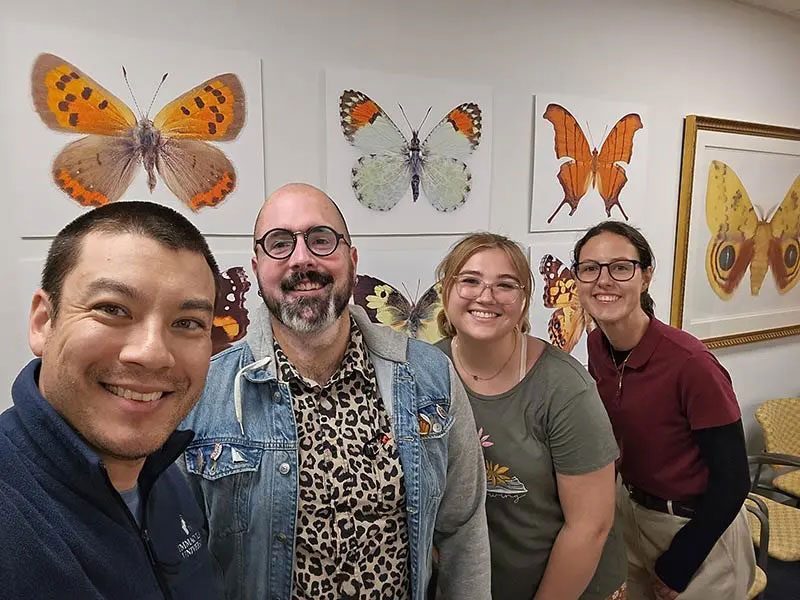
By making these records openly accessible, the project transforms previously hard-to-access biodiversity data into a global research resource, supporting studies of ecological and evolutionary change over time and contributing valuable historical data to major biodiversity databases.
Looking Ahead
At its core, Immaculata works to ensure students are not only academically prepared, but professionally confident, ethically grounded and ready to contribute meaningfully to their chosen fields and communities. As the University looks ahead, that commitment continues to center on connection—linking classroom learning with real-world experience, faculty mentorship with professional opportunity and academic pathways with evolving workforce needs. Through accelerated degree options, employer-informed curriculum design and immersive experiential learning, Immaculata is intentionally shaping an environment where students move from potential to practice with confidence and purpose.